As with all maths topics, before we start asking children to tackle work in an abstract way we need to help them understand and visualise it, feel it and use it in a real-life situation. If we don’t understand it or what it is, how are we going to answer questions on paper?
Perimeter is a great topic to experience practically and following this process will help to give children in Year 3 and beyond a really in-depth understanding and help them tackle problems on paper more effectively and confidently:
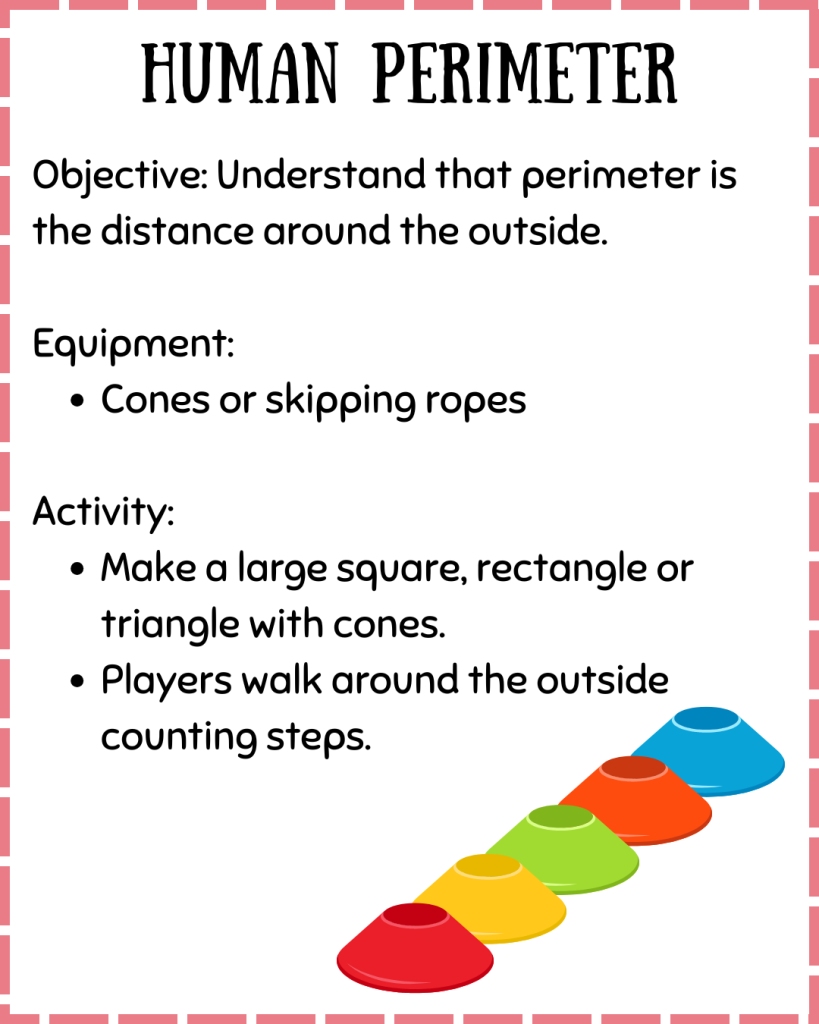
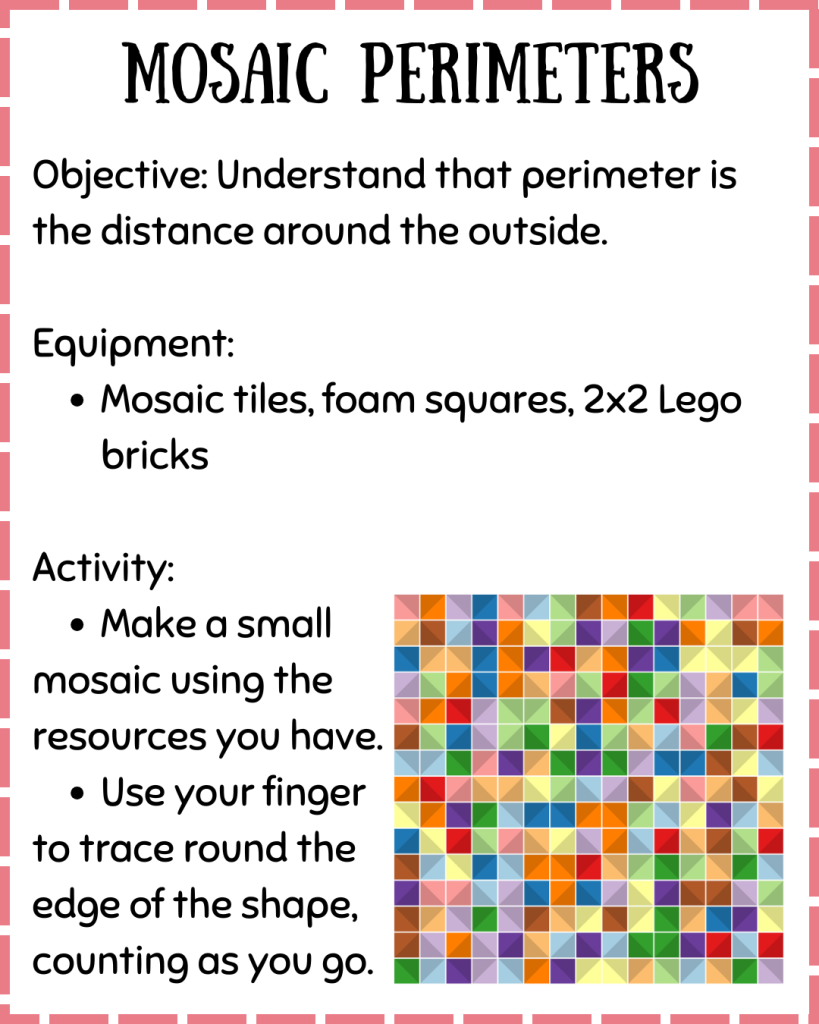
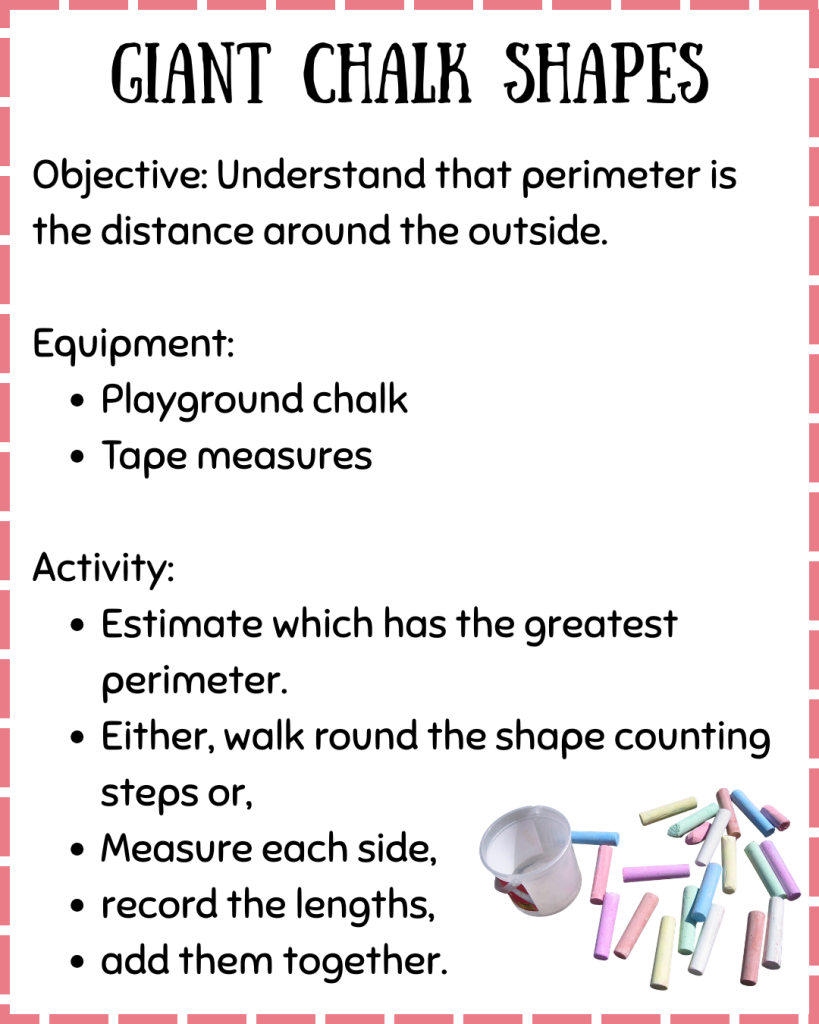
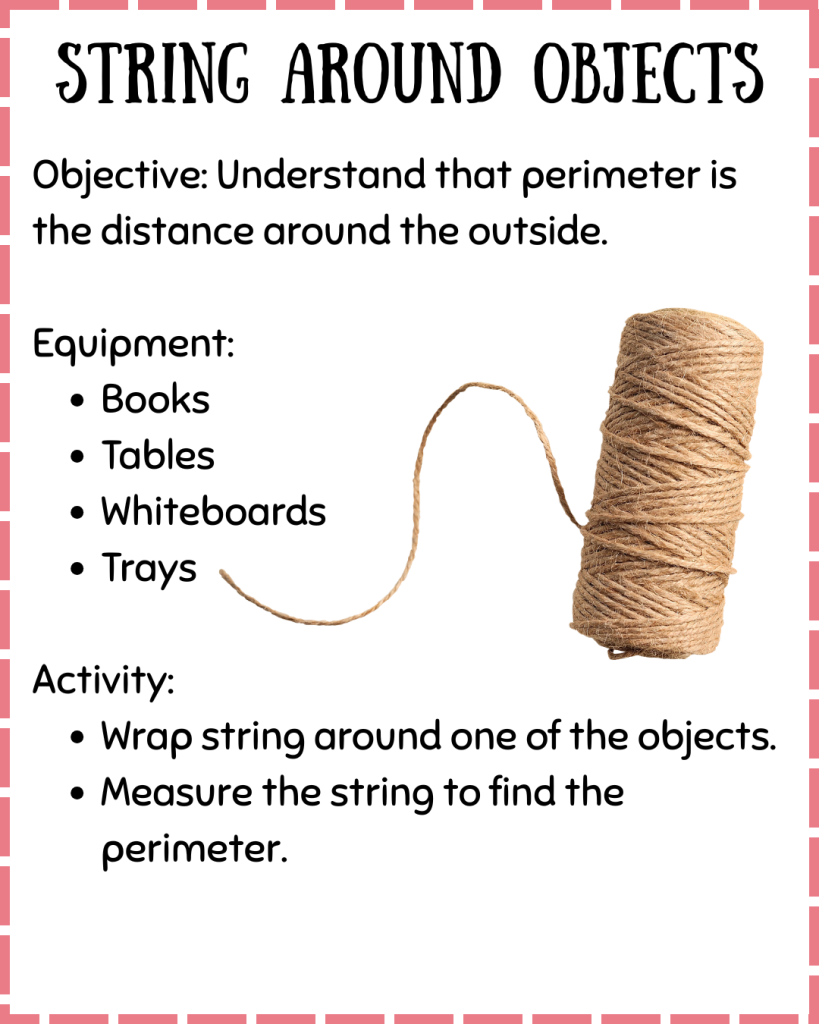
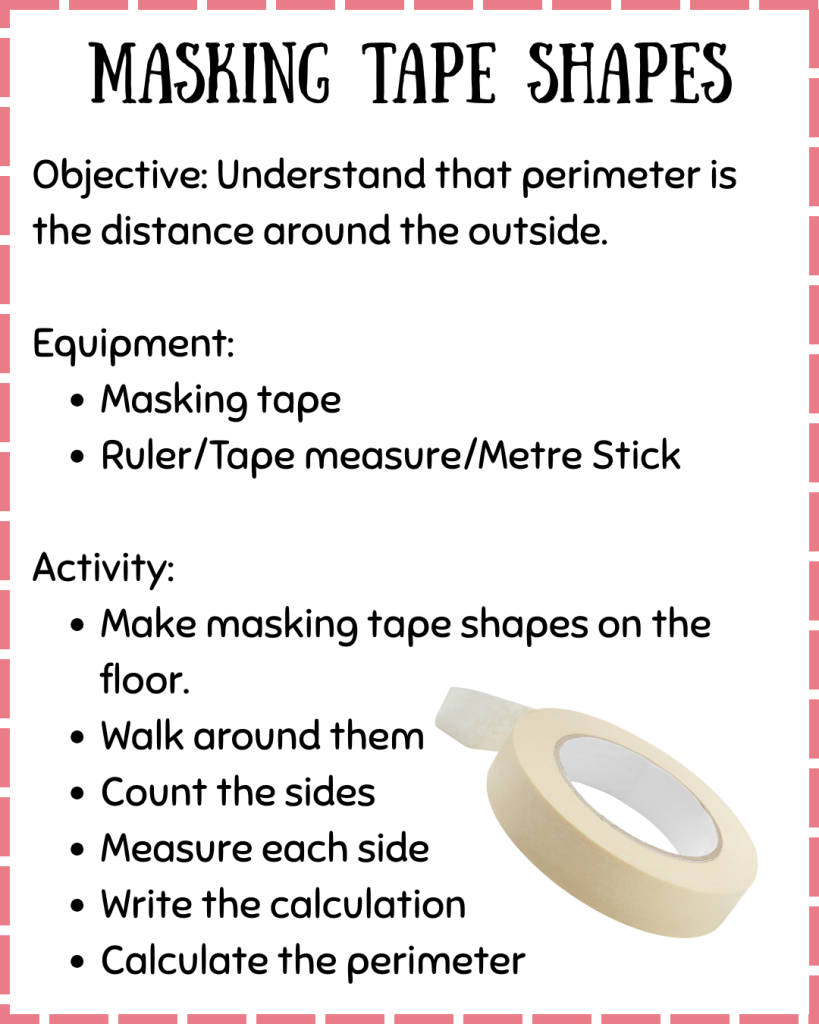
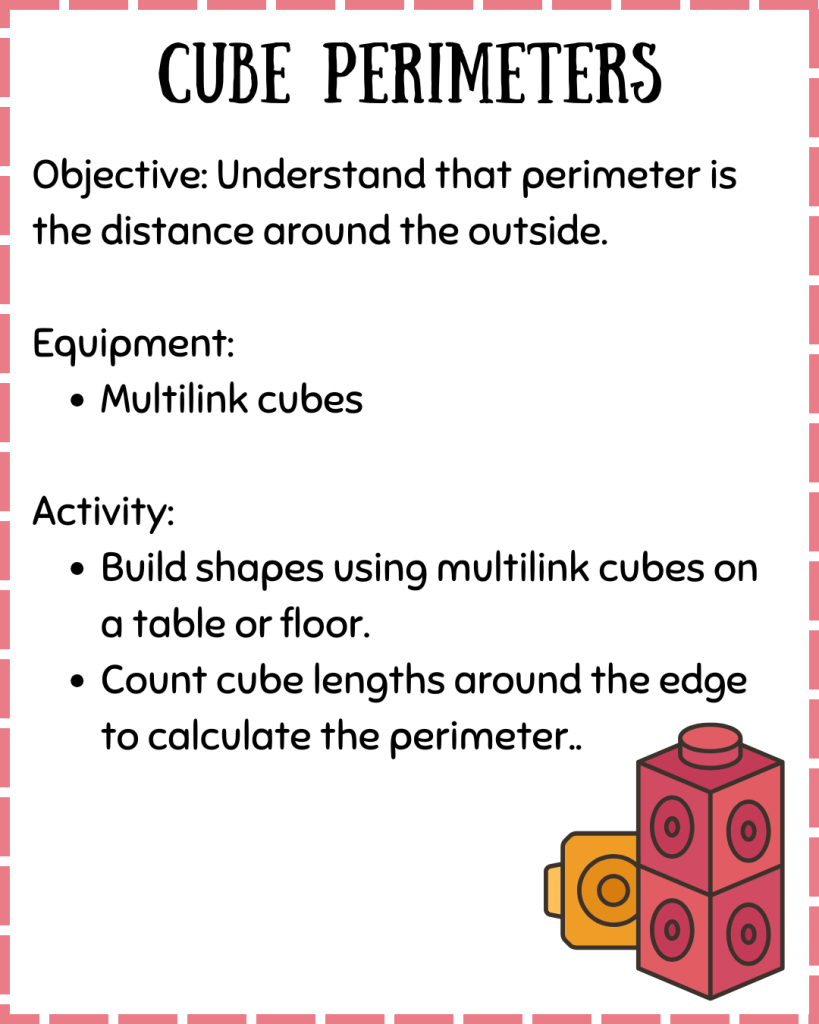
So let’s forget about pen and paper maths, using worksheets and textbooks and instead start our topic on perimeter with practical hands-on activities that will help our children understand what perimeter is and retain the information so that they can use it for more abstract questions later on. Below are a range of practical activities that you can do with your children to get them up and moving and exploring perimeter the fun way! If you want these in a FREE printable version, add your email address below and we’ll send them to you:
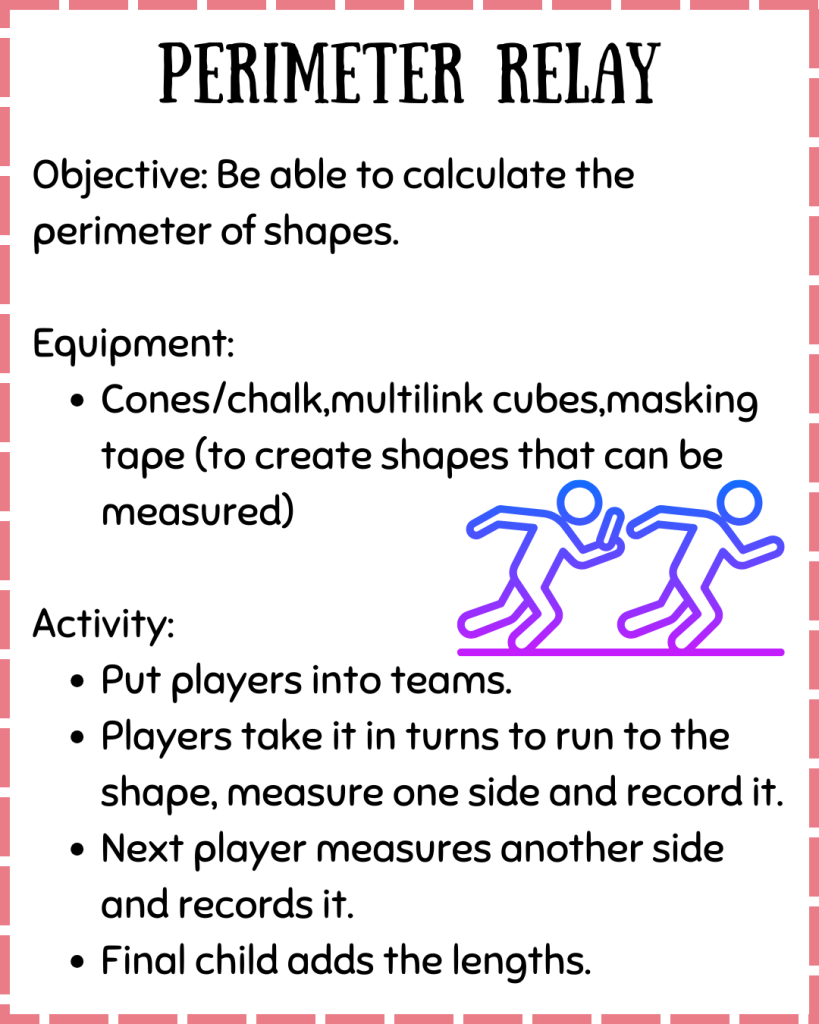
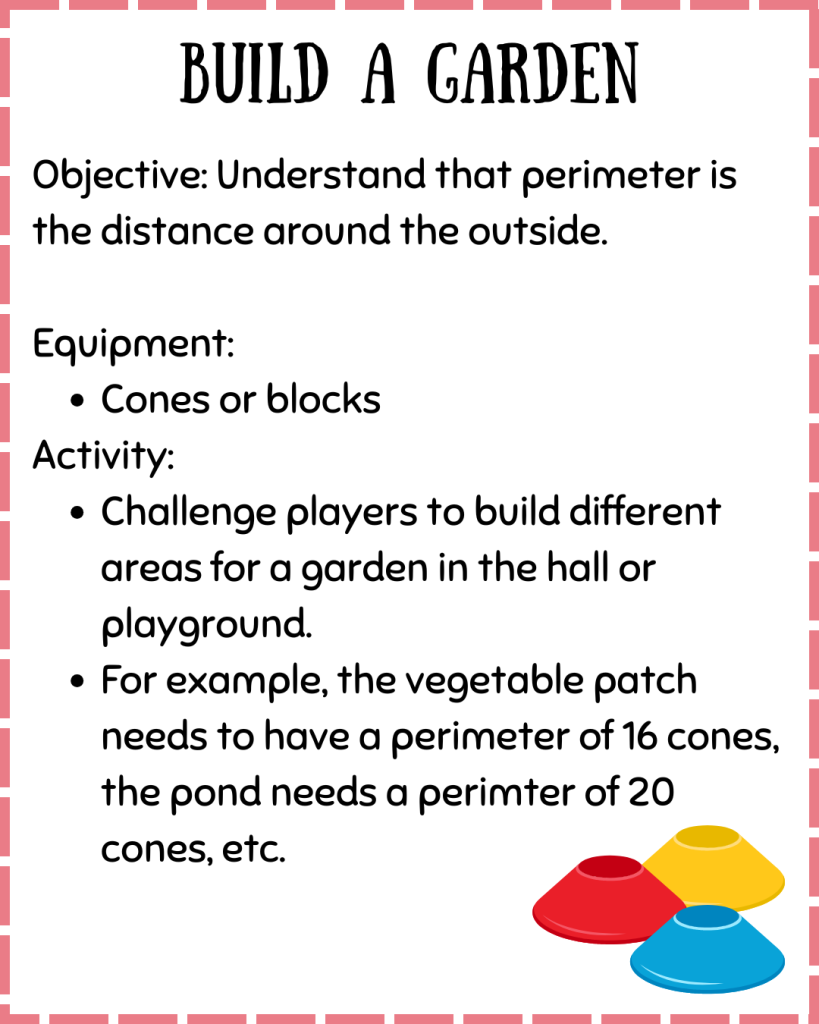
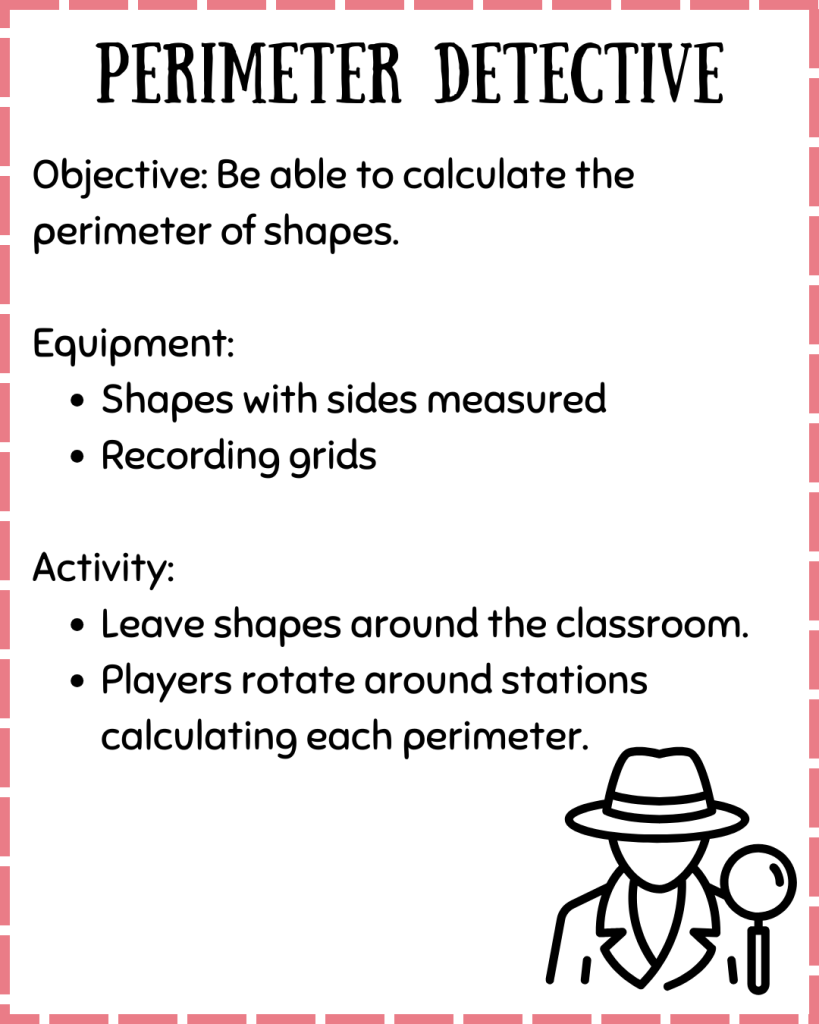
So now you’ve immersed your children in practical perimeter and they have a really good understanding of what it is and how they can begin to calculate it. Through play they have:
Now you can begin to introduce more abstract problems, but we can still do this through play. Perimeter Match is a great game to start with this, where children need to use square counting to match the shape to the correct perimeter. It can be played as a race against others or simply an individual game without any time pressure.
Once we’ve really got to grips with perimeter we can then tackle problems like Perimeter Chain. This is a great game for small groups to work on together, calculating the perimeter of both regular and irregular shapes to complete the chain of cards.
By the time you have played with perimeter in this way, your children will be confident in what it is and how to calculate it and there’s not been a worksheet or textbook in sight!