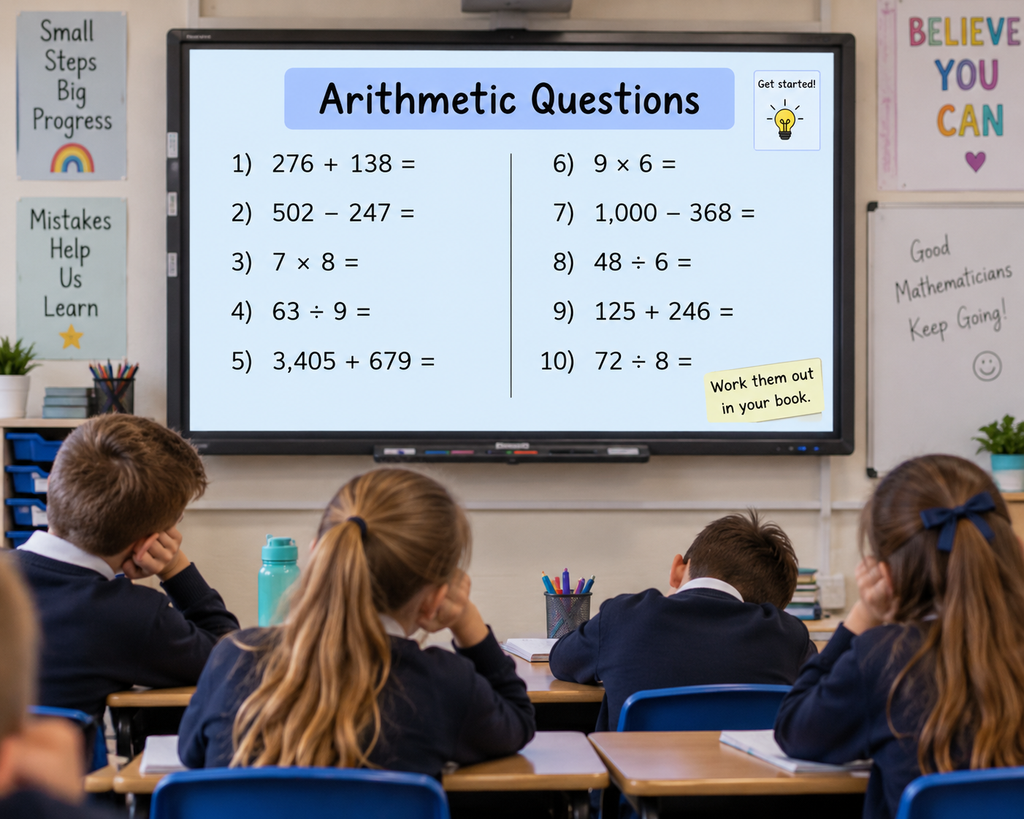
For a long time, the beginning of my maths lessons looked pretty much the same every day. The children came into the classroom, got settled and looked at the board to find a set of arithmetic questions waiting for them. Usually there were around ten questions covering a mixture of maths skills. I had them ready on a PowerPoint, complete with the answers, and I thought I had the perfect maths starter sorted.
After all, there were plenty of good reasons for doing it:
After a transition, there was almost always someone who needed me. A child who hadn’t understood something from the previous lesson, a group I wanted to check in with, books to hand out, resources to organise… Putting arithmetic on the board meant everyone could get on with something independently while I did all of that. At least, that was the theory.
Rather than giving me time to support individuals, I often found myself dealing with more behaviour management issues. Then came sharing the answers. Going through ten different arithmetic questions — often covering several different areas of maths — could turn into a mini maths lesson of its own. Before I knew it, we’d spent a big chunk of the lesson on the starter. And I began to wonder, ‘Was this really the best way to get children ready to learn maths?‘
The problem wasn’t that I didn’t have a good reason for using arithmetic questions, I did. As a teacher, I needed the beginning of the lesson to:
But then I thought about what the children needed from those first few minutes:
That was when I decided something needed to change.
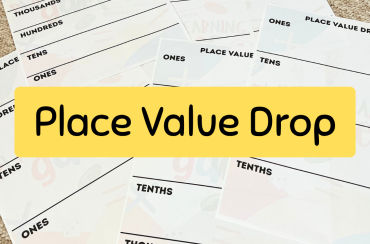
Instead of beginning every lesson with a list of questions, I started experimenting with short, play-based maths activities. And I don’t mean elaborate games that took 20 minutes to set up. These were simple activities. A dice. A whiteboard. A few counters. A pencil. Things we already had in the classroom. The activity could be displayed on the interactive whiteboard and the children could quickly understand what they needed to do. Suddenly, the beginning of maths felt very different.
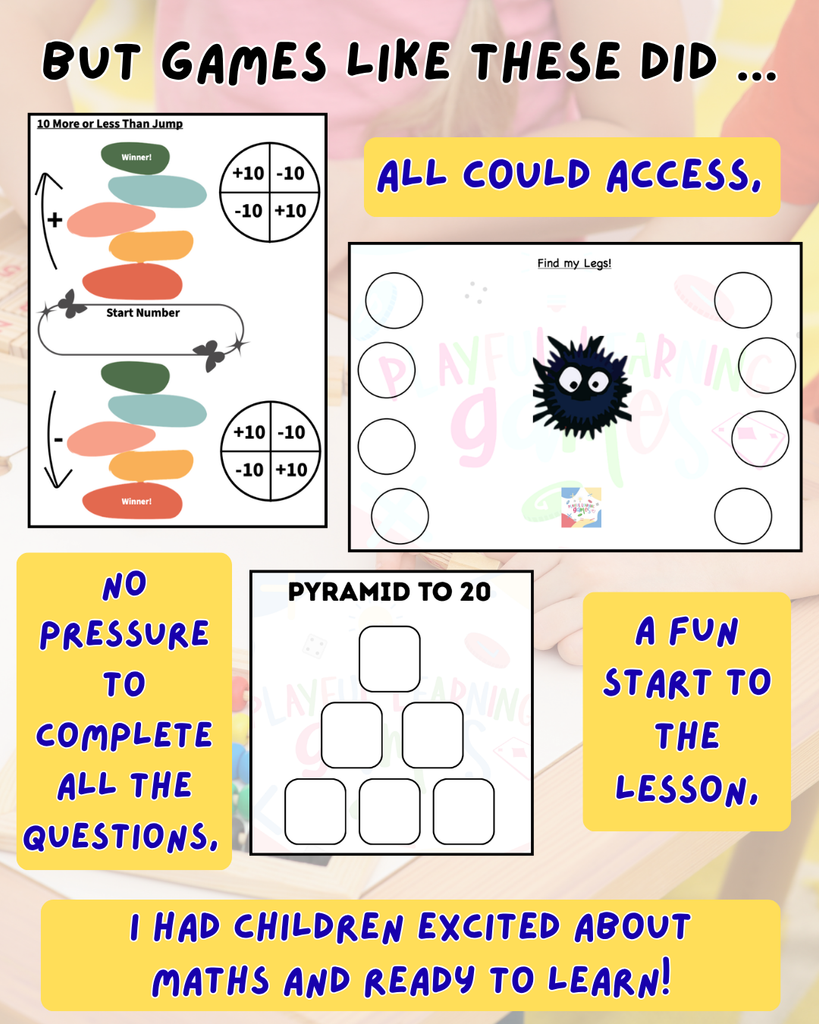
One of the biggest differences was accessibility. A traditional arithmetic starter can make success feel very black and white. You can either answer the question or you can’t. Games gave children more opportunities to participate at their own level. They could practise number facts, calculations, place value or times tables without feeling like they were completing a test before the lesson had even started. There was also less pressure to finish. The aim wasn’t necessarily to get to question 10. Children could play, practise and explore for the time available. And because they were doing something rather than simply working their way down a list of calculations, they were often far more willing to get started.
Maths began with: “Can we play this?” rather than: “How many questions do we have to do?“
That was a win for me.
Play-based maths starters were working brilliantly in the classroom. They weren’t working quite so brilliantly for my planning time! Finding a different idea every day, making sure it practised something useful, keeping the resources simple and then creating something I could display on the IWB took time. And there wasn’t a bank of ready-made play-based starters that I could simply open and use.
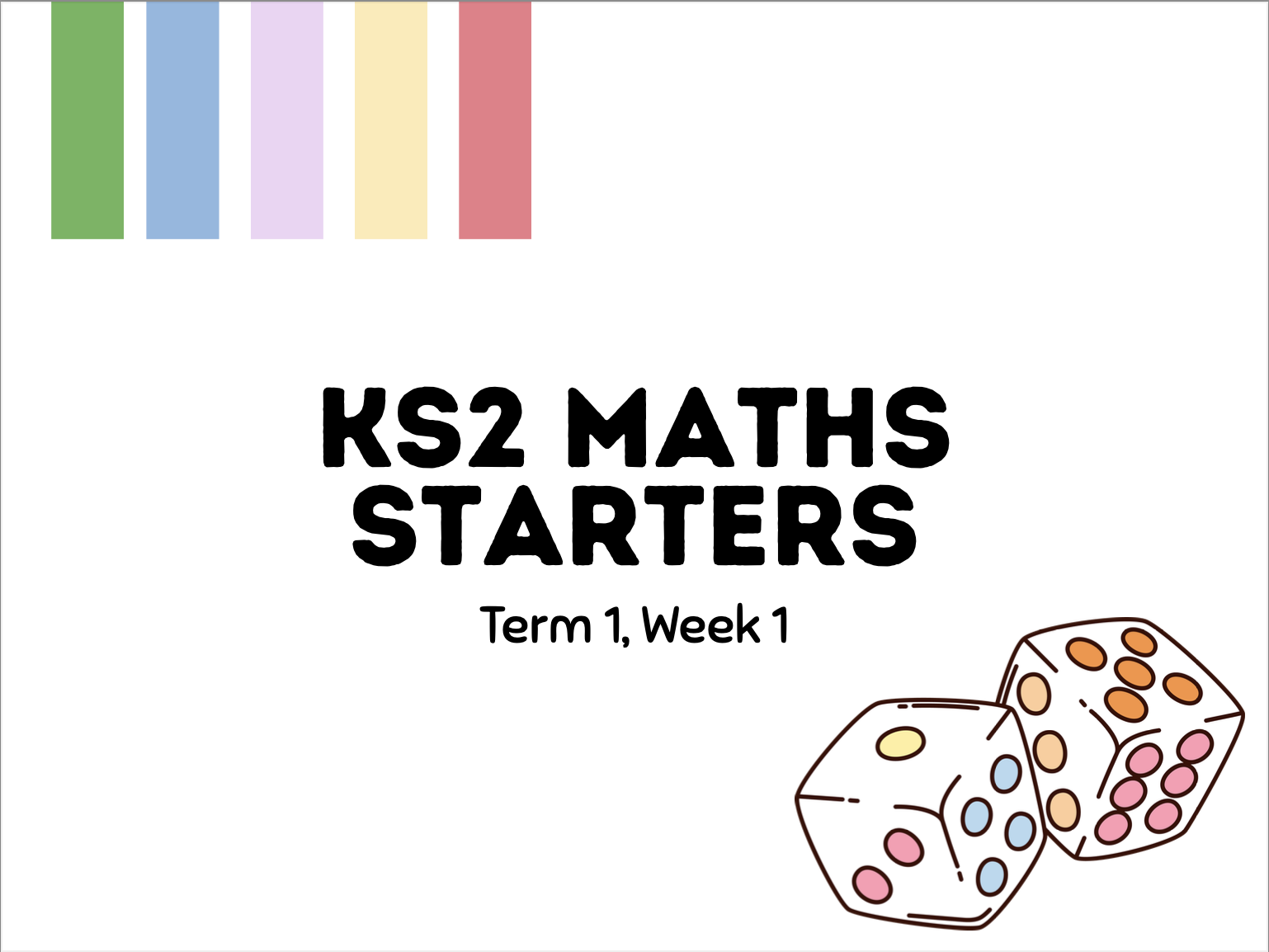
Playful Maths Starters are ready-to-use IWB slides designed to give you a different play-based maths starter for every day of the school week.
The idea is very simple: Five days. Five playful starters. One less thing to plan.
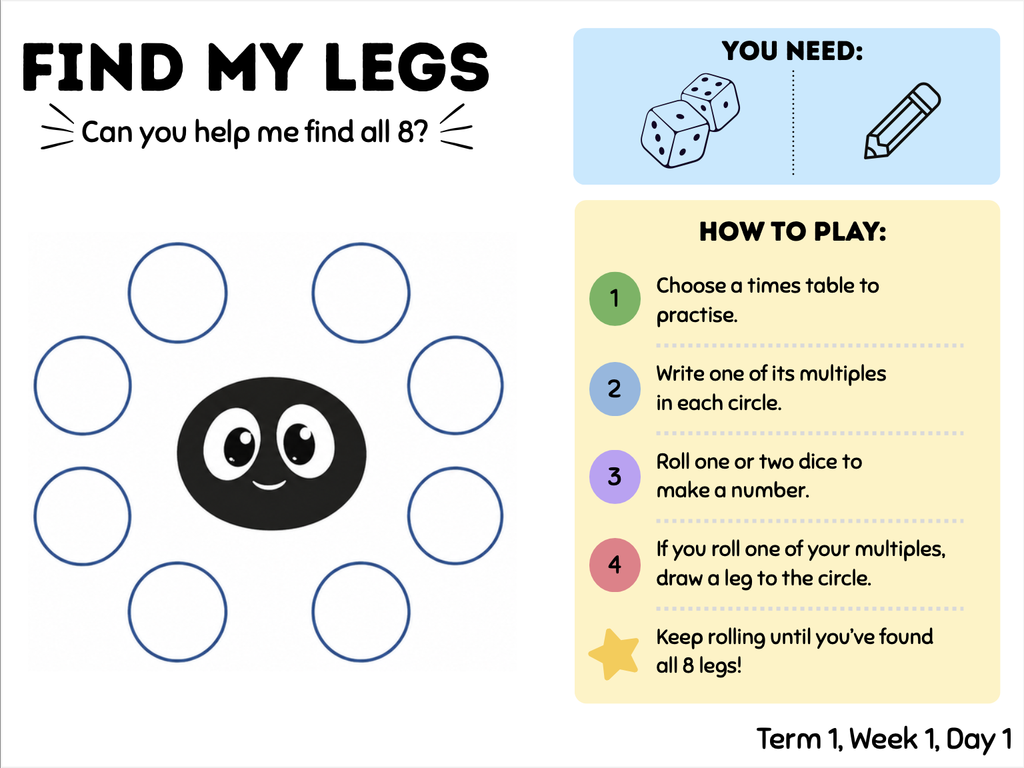
Each activity is designed so you can display it on your interactive whiteboard and get children playing as quickly as possible. You’ll find activities covering different areas of maths, with games that use familiar classroom resources such as dice, whiteboards, pens and counters. The instructions and equipment are right there on the slide, so you don’t need to spend your morning trying to remember how a game works or hunting around the stock cupboard for 30 obscure resources!
Most importantly, they’re designed to help children walk into a maths lesson and see something they want to do. Because practising maths doesn’t always have to mean answering ten questions on a board. Sometimes it can mean rolling a dice, building a number, finding multiples, solving a challenge, competing with a partner or trying to beat your previous score.
I’m not suggesting that arithmetic practice doesn’t have a place in the classroom. Of course it does. The change for me was realising that it didn’t have to be the way I started every single maths lesson.
Those first few minutes set the tone. I wanted children to come into maths feeling curious rather than worried. I wanted reluctant mathematicians to feel that there was something they could join in with. I wanted my confident mathematicians to be challenged without simply giving them another five questions when they’d finished.
Play gave me another way to do that. And now I’ve done the planning part for you.
The Playful Maths Starters are available to download now. Simply put the slide on your IWB, grab the minimal resources listed and let your class get started.
Five days. Five playful starters. One less thing to plan.