

Does your child have a ‘fear’ of maths? Is it times tables, word problems, fractions? The list can go on!
Maths spans so many areas that I could go on for a long time talking about it and how we can support our children who are fearful of it. However, I’ve tried to generalise my three tips and then will write some more blogs about specific areas of maths in the future.
I found maths really hard and found these tips I learnt about teaching maths made things click much more for me. I’m also a big advocate in talking to children about why we are learning a particular area of maths. I didn’t see the point in a lot of the maths that I learnt so if you can talk about why we are learning it and what it will help us with, they will be a lot more on board with learning. Link it to real-life as much as possible.
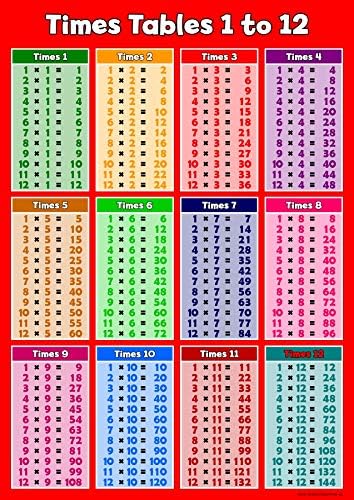
1. Times Table Sheet – When children are learning their times tables I think it’s really important for them to have access to the times table answers themselves. Children won’t have fun playing games and learning them if they feel they are already set up to fail by not having some support. Therefore, just write out the times table that they are working on and have it on the table somewhere so they can see it. Tell them that they can look at it if they want and I can guarantee, after a few times of playing games with this additional support, they will soon stop needing to look at the answers.
2. Practical Resources – Children need to understand what is going on in maths in order for them to be able to answer more complex questions in the future. For them to understand, they need to be given the chance to play with maths using practical resources. Let them share sweets into equal piles, cut a cake according to the fraction you give them, actually weigh and measure things. When it comes to number work, there are lots of resources that we can use to help them understand the value of a number and what happens to them in different calculations. Place value counters and Base 10 blocks are great but you don’t have to buy these for home, you can use the things you have to recreate these. See the links below to give you ideas of how you can make your own resources for home (or school if you don’t have the budget to buy lots of fancy resources).
Place Value Counters
Column Addition with Snacks
Bottle Top Column Addition
Fractions with Playdoh
3. Draw It Out – This technique is to help with word problems. They still send a shiver up my spine when I see them now. All those words, a ridiculous scenario that often never happens and random numbers thrown in that we don’t need to use! This was my biggest fear at school and I still feel it at times now. This technique really helped me and a lot of my children when we were tackling word problems at school:
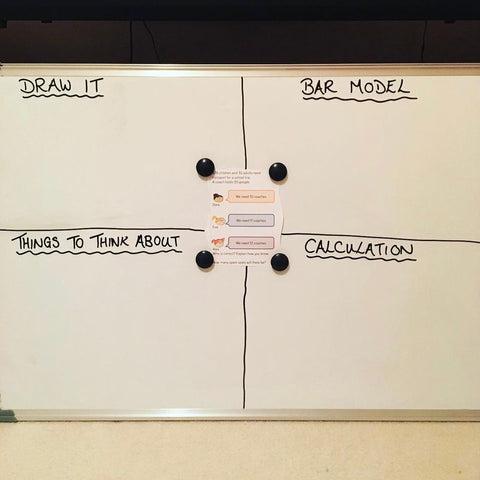
If you work through this together with your children and model how to do it, it’s a more effective way in understanding a word problem and what to do to solve it.
I’d love to know if you try any of these and if they have an impact on your children feeling more confident with maths. Comment below with your thoughts.

