The aim is to build and compare numbers of increasing size using place value knowledge. Players compete to create the largest numbers in each round, with the winner collecting the cards. The player with the most cards at the end wins.
What You Need
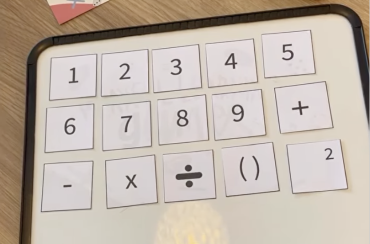
Two sets of number cards (0–9 in each set)
Six wild cards (any design will do—just make sure they’re recognizable)
A flat surface to lay out the pyramid
Game Setup
Shuffle all the number and wild cards together thoroughly.
Lay the cards out in a pyramid shape, one pyramid for each player:
Top row (1 card) → 1-digit number
Second row (2 cards) → 2-digit number
Third row (3 cards) → 3-digit number
Bottom row (4 cards) → 4-digit number
How to Play
Start with the top row.
Both players flip their 1-digit card at the same time.
The player with the bigger number wins both cards.
Move to the 2-digit numbers.
Flip over both cards.
If a player has a wild card, they can choose any digit (0–9) to replace it with.
Compare numbers; the larger number wins all four cards.
Play the 3-digit round.
Flip over the three cards.
Special rule: If a player’s hundreds place is a zero, they can move it to a different position (tens or ones place).
Decide on the biggest number. The winner takes all six cards.
Play the 4-digit round.
Flip over the four cards.
Again, if a player has a zero in the thousands place, they may move it to another column.
The higher number wins all eight cards.
Winning the Game
After all four rounds, count up the total number of cards each player has collected.
The player with the most cards is the winner!
Educational Benefits
Place Value Understanding: Reinforces the importance of digit position (ones, tens, hundreds, thousands).
Flexible Thinking: Wild cards and moving zeros encourage players to think strategically.
Comparing Numbers: Builds confidence in identifying and reasoning about larger and smaller numbers.
Problem Solving: Players must consider the best way to use wilds or reposition zeros.
Fun & Engagement: Turns number practice into a competitive, game-based activity.